


Sangiovese
Sangiovese
Italy's great red variety, known for vibrant acidity, savoury complexity and expressive red-fruit character
Sangiovese is one of Italy's most important native red grape varieties and is closely associated with Tuscany. It forms the foundation of celebrated wines such as Chianti, Brunello di Montalcino and Vino Nobile di Montepulciano.
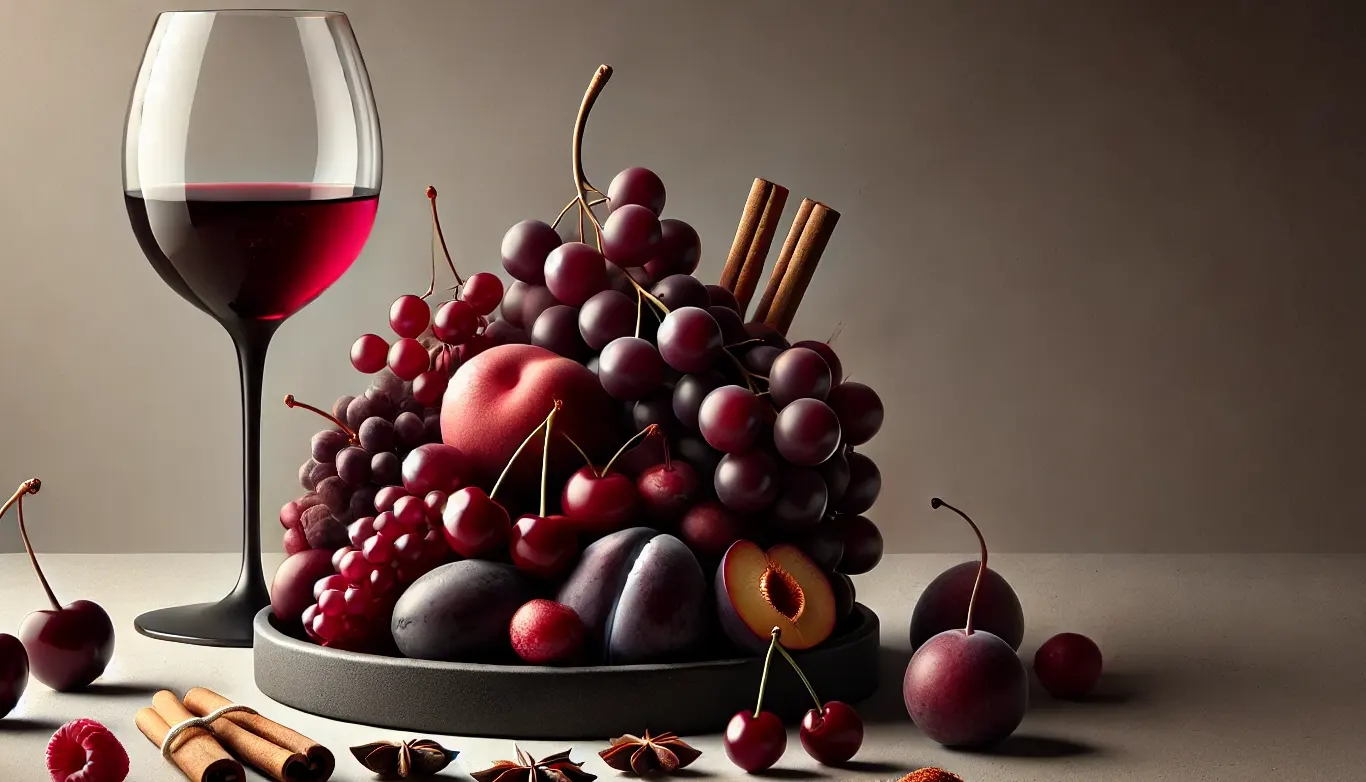
The variety is prized for its natural acidity, firm but refined tannins and aromas of cherry, plum and raspberry, often accompanied by herbal, spicy and savoury nuances.
Sangiovese in Romania
Around 73 hectares of Romanian vineyards are planted with Sangiovese. Although the variety remains relatively rare compared with Romania's major indigenous and international grapes, a number of producers are exploring its potential in different wine-growing areas.
Plantings are found in regions including Muntenia, Dobrogea and Transylvania. Their differing soils, altitudes and climatic conditions allow Sangiovese to develop a range of distinct expressions.
Romanian Sangiovese generally retains the variety's hallmark combination of freshness and tannic structure. Aromas can range from sour cherry, raspberry and plum to darker fruit, complemented by herbs, spice and subtle earthy notes.
In warmer sites, the variety can achieve greater ripeness, concentration and body, while cooler areas may emphasise acidity, aromatic precision and elegance. Depending on the desired style, producers may use stainless steel, large neutral vessels or oak maturation to shape the final wine.
Sangiovese remains a niche variety in Romania, but its distinctive balance of fruit, acidity and savoury complexity adds another dimension to the country's increasingly diverse wine landscape.
Key Romanian wine regions
Typical tasting notes
 Cherries
 Plums
Plums
 Raspberries
 Spices